
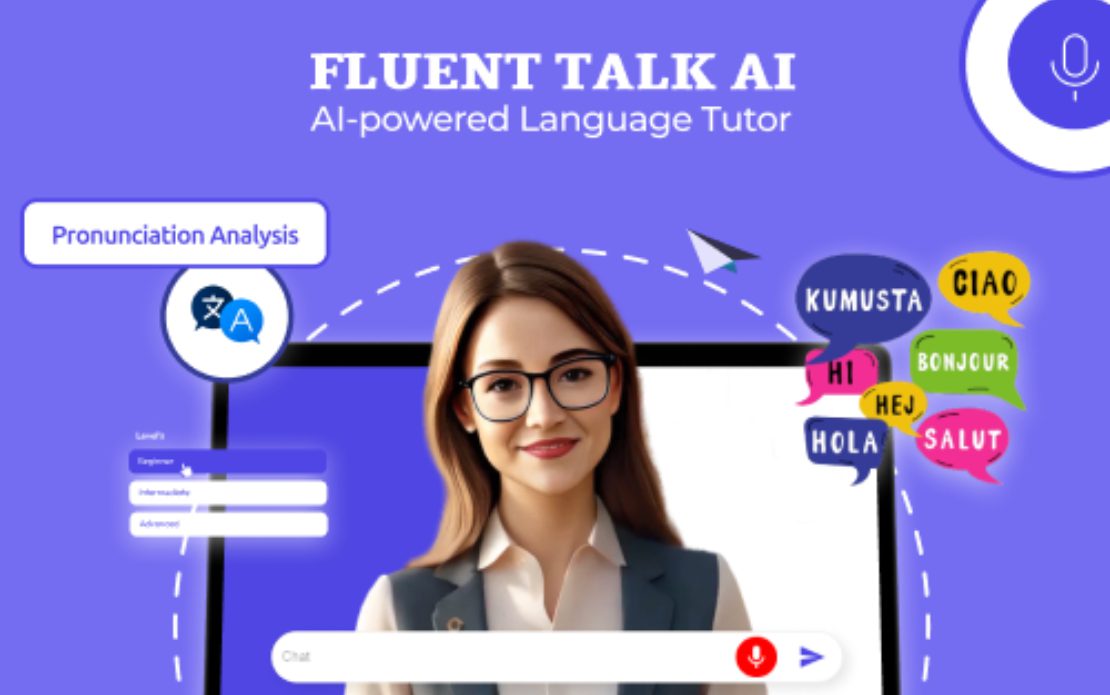
A personalized ai language tutor is an advanced digital tool designed to help learners improve speaking, listening, and comprehension skills in real-world contexts. Unlike traditional language apps or textbooks, these tutors adapt to individual learning styles, skill levels, and goals. Statistical research in educational technology shows that adaptive learning platforms improve retention and engagement by up to 60% compared to static methods. Using natural language processing (NLP) and speech recognition, AI tutors provide instant feedback on pronunciation, grammar, vocabulary usage, and conversational fluency, creating an interactive learning environment tailored to each user.
Why Is Real-World Speaking Practice Essential for Language Learning?
Language acquisition research consistently highlights the importance of speaking practice. Studies show that learners who engage in daily oral practice improve fluency 2–3 times faster than those who focus solely on reading or writing. Real-world practice develops not only vocabulary and grammar but also listening comprehension, contextual understanding, and confidence in communication. Personalized AI tutors simulate authentic conversation scenarios, allowing learners to practice dialogue in realistic contexts such as ordering food, conducting business calls, or casual social interactions, significantly accelerating practical language proficiency.
How Does AI Personalization Improve Learning Outcomes?
AI tutors analyze user interactions to customize lesson plans, challenge difficulty, and content focus. Statistical evidence from adaptive learning systems shows that learners achieve higher proficiency scores when instruction is tailored to their strengths and weaknesses. For example, AI platforms can identify patterns in pronunciation errors or grammar mistakes and provide targeted exercises. This level of precision ensures that learners spend more time on areas requiring improvement, increasing efficiency and measurable skill gains.
What Role Do Speech Recognition and Feedback Play?
Speech recognition technology is central to personalized AI tutoring. Real-time analysis of pronunciation, intonation, and rhythm allows the system to provide corrective feedback immediately. Studies reveal that instant feedback improves retention rates by 25–35%, compared to delayed or manual corrections. Users can repeatedly practice phrases, receive visual and auditory cues, and track improvement over time. This iterative process helps learners internalize proper pronunciation and natural speech patterns.
Why Are Conversational Simulations Effective for Language Mastery?
Conversational simulations replicate real-world scenarios, which are statistically proven to enhance learner engagement and language transfer. Research indicates that practicing in context-rich environments improves the ability to recall and use new vocabulary by over 50%. AI tutors generate dialogues appropriate to the user’s level, simulate realistic speech patterns, and respond dynamically, ensuring that learners develop both linguistic accuracy and communicative confidence.
How Do Personalized AI Tutors Adapt to Different Skill Levels?
AI-driven language tutors continuously adjust based on proficiency data. Beginner learners may focus on foundational vocabulary, basic sentence structures, and pronunciation drills, while intermediate and advanced learners tackle complex grammar, idiomatic expressions, and nuanced conversation topics. Performance metrics are tracked in real time, allowing the system to gradually increase difficulty as learners demonstrate competence. Data from adaptive systems shows that skill-adjusted learning significantly reduces plateau effects and accelerates overall progression.
What Do Statistics Reveal About Learner Engagement with AI Tutors?
Engagement is a key predictor of language acquisition success. Studies of AI learning platforms report that learners using personalized tutoring engage 40–50% longer per session compared to traditional digital courses. The combination of gamified exercises, instant feedback, and real-world conversation scenarios keeps learners motivated and reduces dropout rates. High engagement correlates directly with measurable improvements in fluency, vocabulary retention, and listening comprehension.
How Does AI Support Error Analysis and Targeted Practice?
AI platforms track errors in grammar, pronunciation, word choice, and sentence structure. Statistical analysis of error patterns allows the tutor to create targeted exercises that focus on high-frequency mistakes. Research shows that learners practicing error-specific drills improve accuracy up to 70% faster than those using generalized practice. Personalized correction mechanisms make the learning process more efficient and reduce frustration by addressing challenges at the individual level.
Why Is Flexibility Important for Modern Language Learners?
Time availability and learning pace are major factors influencing language learning success. Surveys indicate that 65% of adult learners struggle to maintain regular practice due to busy schedules. AI tutors offer flexibility, allowing learners to practice anytime, anywhere, and at their own pace. Statistical studies show that flexible learning environments improve retention and engagement, particularly for professionals and students with variable schedules.
How Does Data-Driven Tracking Enhance Learning Progress?
Data analytics is central to the effectiveness of AI tutors. Platforms track session duration, accuracy rates, vocabulary retention, pronunciation improvement, and conversational fluidity. Visual progress reports allow learners to monitor their growth over time. Studies indicate that learners who track measurable progress report higher motivation and satisfaction, creating a positive feedback loop that supports continuous improvement.
What Role Does Cultural Context Play in AI Language Tutoring?
Effective communication depends on understanding cultural norms and context. AI tutors incorporate cultural nuances, idiomatic expressions, and context-appropriate language, which studies show improves practical language comprehension by up to 40%. Simulated conversations in cultural contexts allow learners to practice responses for workplace interactions, travel situations, and social settings, ensuring that language use is not only grammatically correct but socially appropriate.
How Do AI Tutors Promote Confidence in Speaking?
Confidence is a major barrier in language learning. Research shows that learners who practice speaking in a safe, judgment-free environment are more likely to initiate conversations in real life. AI tutors provide this safe space, allowing repeated practice without fear of embarrassment. Statistical evidence indicates that learners using AI conversational simulations report higher self-efficacy and are more likely to engage in real-world communication.
Why Is Continuous Adaptation Critical for Long-Term Learning?
Language learning is dynamic, requiring constant adjustment based on progress and challenges. AI tutors employ continuous learning algorithms that adapt lesson plans, conversation topics, and difficulty levels as learners improve. Studies demonstrate that adaptive systems reduce the risk of stagnation and help learners maintain consistent progress, ensuring that practice remains effective and engaging over months or years.
What Do Comparative Studies Show About AI Tutors vs. Traditional Methods?
Research comparing AI tutors to traditional classroom or app-based methods consistently shows measurable advantages. Learners using AI-driven personalization achieve faster fluency gains, higher pronunciation accuracy, and improved listening comprehension. Statistical comparisons indicate that adaptive AI learners outperform traditional learners by 30–50% in standardized language assessments, highlighting the value of real-time feedback, targeted exercises, and immersive conversation practice.
How Do AI Tutors Support Diverse Learning Preferences?
Not all learners benefit equally from the same instructional methods. AI tutors accommodate auditory, visual, and kinesthetic learners by providing speech practice, visual prompts, interactive exercises, and contextual simulations. Statistical studies show that multi-modal learning environments increase retention rates by up to 60%, ensuring that personalized approaches meet the needs of a broader population.
What Are the Impacts of Long-Term Use of AI Tutors?
Long-term engagement with AI tutors produces measurable improvements in real-world communication. Learners demonstrate increased conversational fluency, faster reaction times, better comprehension, and higher confidence in speaking situations. Longitudinal studies suggest that users practicing 30 minutes daily over six months achieve measurable improvement equivalent to multiple semesters of traditional classroom instruction.
How Does AI Language Tutoring Fit Into Lifelong Learning Trends?
Statistics indicate that adult learners increasingly prioritize flexible, personalized education. AI tutors align with lifelong learning principles by providing adaptive content, continuous feedback, and accessible practice opportunities. Surveys of professionals and students show that integrating AI tutoring into daily routines leads to sustained skill acquisition, practical application, and long-term language retention.
Conclusion: Why Personalized AI Tutors Transform Language Learning
Data-driven evidence demonstrates that personalized AI language tutors offer a measurable, effective, and flexible approach to developing real-world speaking skills. By combining adaptive instruction, real-time feedback, conversational simulations, and cultural context, these systems improve fluency, accuracy, and confidence. Statistical studies confirm faster skill progression, higher engagement, and better retention compared to traditional methods. For modern learners seeking practical, efficient, and personalized language acquisition, AI tutors provide a transformative solution that bridges the gap between theory and real-world communication.